Editorial comparison
CoinTracking vs CoinLedger: all-year capacity and per-year report purchases
Compare cumulative history capacity with separate tax-year report purchases, including a worked budget, import checks, revisions and professional handover.
CoinTracking or CoinLedger: define history and reports before paying
CoinTracking vs CoinLedger starts with the history you need to retain and the years requiring downloadable reports. CoinTracking applies capacity across imported history and offers different report years through a paid plan. CoinLedger imports history across years but sells each tax year's reports separately. That distinction matters when catching up on several years or when recent activity is small relative to older activity.
Before comparing plans, list the activity years that must be imported and the report years requested by your professional. These lists need not be identical. An old purchase can explain an asset sold later even when you do not currently require a report for the purchase year. Starting with the required outputs prevents comparing prices for different jobs.
The CoinTracking review provides product background. This article makes the direct choice against CoinLedger without implying a commercial relationship with an outside-catalogue company. For readers already using another system, Koinly vs CoinTracking and Koinly vs CoinLedger provide migration context. This comparison does not choose a tax method or determine which returns an individual must prepare. It evaluates capacity, purchasing and the work needed to produce reviewable records. No customer-account testing or comparative accuracy measurement is claimed.
Comparison table: the charging unit matters more than the headline
Similar plan labels can describe different rights. Read the period and record scope beside the price, and distinguish portfolio viewing from report downloads.
Scroll the table horizontally to read every column.
| Decision point |  CoinTracking | CoinLedger |
|---|---|---|
| Capacity basis | All imported history | Billable transactions in the report year |
| Report access | Different report years under an active paid plan | Separate purchase for each report year |
| Example public USD base price | Pro: $169/year, up to 3,500 records | Investor: $99/report year, up to 1,000 transactions |
| Free use | Portfolio viewing after import trial; reports paid | Portfolio tracking before report purchase |
| Check in the account | Cumulative volume and subscription term | Selected year and billable usage |
CoinTracking states a 7-day trial; do not plan on permanent free importing after it ends. Table prices are public base figures without a calculation of possible taxes or extras, rather than personal checkout quotes. Also confirm that the chosen plan includes the update method you need.
Ask for pricing against the same work package. A requirement for a single report should not be costed as though every historical report is needed. A multi-year correction should not be priced using only the latest year. A low starting card can cease to fit after the history is completed.
The report year does not define where importing begins
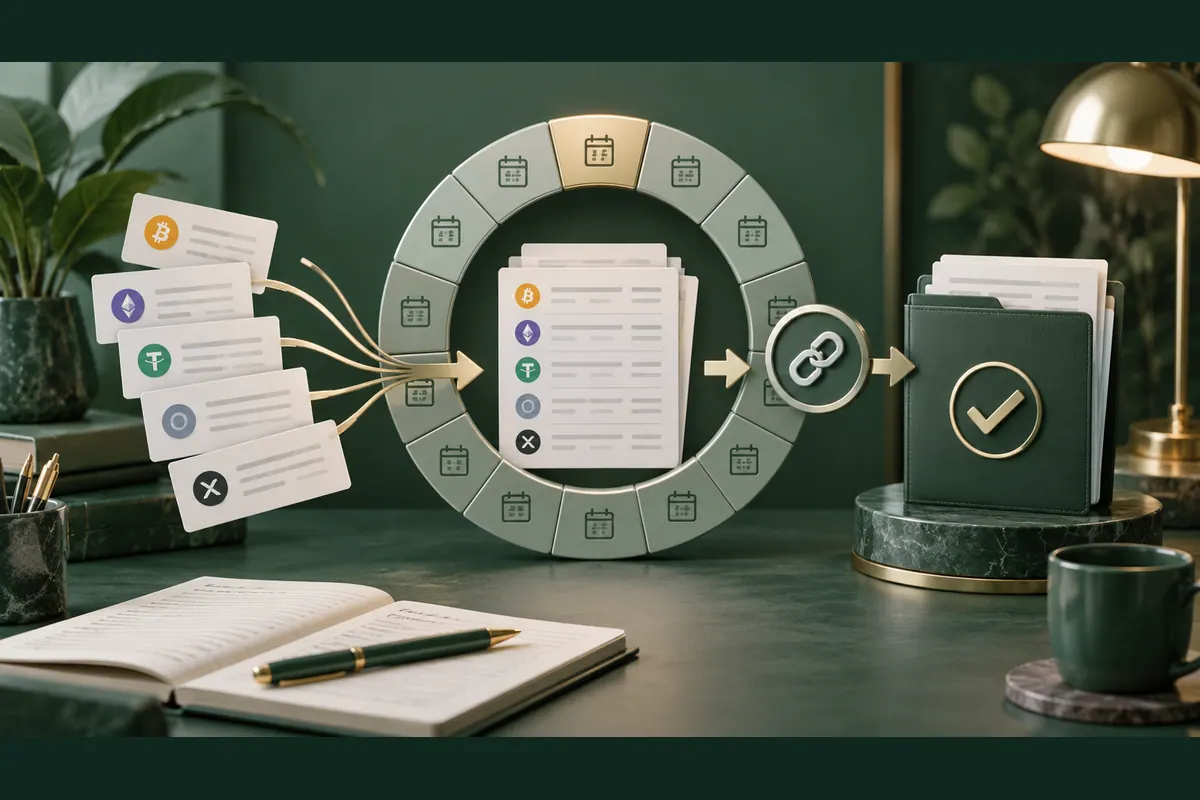
CoinLedger instructs users to import history from all years and wallets before buying reports. CoinTracking also documents the need to complete history when diagnosing balances. Selecting a report year is therefore not an instruction to discard earlier activity. Preserve the connection between acquisition, movement and later holdings even when the current project concerns a later year.
Prepare a source map containing the exchange or wallet, usage period and available records. For each source, identify the earliest familiar event you will look for after importing. Include closed accounts and addresses no longer used. A small current balance does not establish that earlier activity is irrelevant to explaining assets already sold.
The source map distinguishes unavailable material from an import limitation. If records exist but do not appear, investigate the format and connection. If an account is inaccessible, look for saved exports and receipts. Changing software does not guarantee that missing evidence will reappear.
Readers still collecting exchange files can use Koinly vs exchange exports for that stage. The question here is which system can maintain an explainable history at a suitable cost. Do not shorten necessary history to fit a plan or replace a missing purchase with an unsupported convenient value. Record the gap and the evidence required to resolve it before treating the dataset as complete.
A hypothetical budget: how several years fit together
For illustration only, assume that after reconciliation each product shows 800 transactions in the first year, 900 in the second and 1,000 in the third. Also assume these counts fit both products' charging rules and that reports for all three years are required during the same working period. These simplifying assumptions are not customer data or a promise of identical counting.
The total is 800 + 900 + 1,000 = 2,700. Under the selected plans in the table, that fits CoinTracking Pro during one annual subscription at the $169 base price. Buying CoinLedger Investor for each year gives 99 × 3 = $297. This calculation assumes the listed plans and prices apply at purchase and excludes possible extras, reconciliation services and professional review.
Now assume another source adds 1,000 older records under the same counting assumption. History becomes 3,700, exceeding the example's 3,500 capacity. CoinTracking pricing needs reassessment even though the requested report years have not changed. For CoinLedger, check which year receives billable additions and whether report rights or an upgraded tier are required for it.
Also compare the working period. Additional subscription periods need budgeting separately. If one system already holds an explained history, migration time may matter more than the arithmetic difference. The exercise compares defined assumptions, without establishing a universally cheaper product.
Imports and counting: give every file a defined purpose
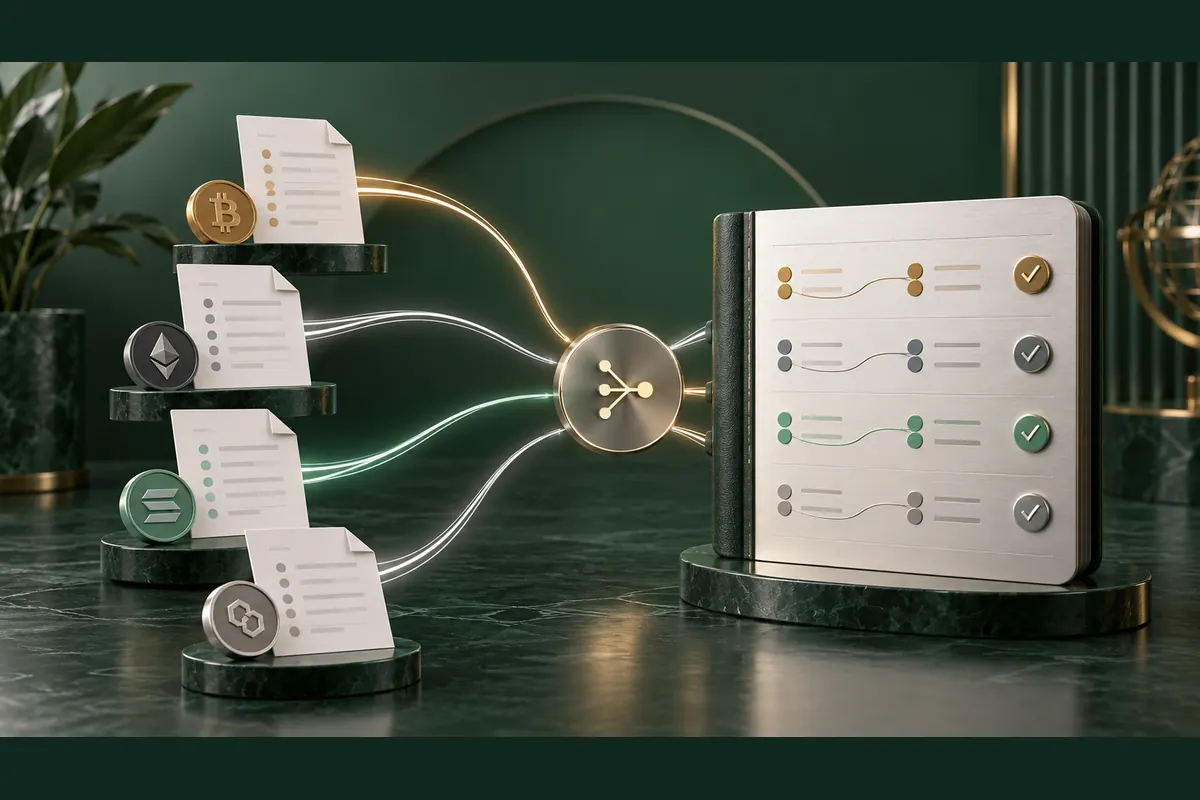
CoinTracking documents API connections, exchange files and manual entry according to source instructions. CoinLedger also documents public-address imports alongside supported CSV, API and manual methods. These options do not establish complete coverage of every product, network or event type. Check your actual activity before comparing the cost of capacity.
Choose a sample source and define the range each import method should cover. When adding CSV to history already imported through API, examine overlap first. Preserve the source and the reason for supplementing it. After import, compare an early transaction, a recent event and a familiar transfer. This is a proposed procedure, without measured error rates or completion times for either product.
File rows are not necessarily billable transactions. CoinLedger lists counting exclusions including self-transfer deposits and withdrawals and uncategorized records under its product rules. Inspect actual usage in the account. In particular, an unclassified record remains unfinished work even if it has not contributed to the price.
If the products show different counts, establish whether the difference comes from overlap, grouping or a missing event. That makes the comparison concern the same material before payment. Leaving real activity unresolved is not a valid cost-saving strategy. Every correction should preserve a path back to its source and explain why the count changed.
Quality checks: reconcile balances and investigate warnings
CoinTracking's Missing Transactions report looks for withdrawal and deposit counterparts, using amounts and times to assess matches. CoinLedger flags missing acquisition history and uncategorized activity. Each view raises questions to investigate. A cleared warning does not certify that all material has been reviewed, and a matching balance does not by itself explain acquisition cost.
Follow a real sequence from purchase through an account transfer to a sale or remaining holding. Check that the receiving account does not accidentally represent a new purchase and that the transfer fee remains explained. If a side is missing, locate the correct account and network before making manual changes. Matching records is a data check; professional interpretation of the event remains a separate question.
CoinLedger excludes Uncategorized activity from report calculations until appropriately classified. Put those records on the work list before handover. Do not choose a label simply to quiet the screen. Preserve what happened and the supporting document; make an unresolved question visible when evidence is still missing.
Compare the same asset at the same point in time. If one product has an extra source, the datasets are not yet equivalent. Preserve a comparison point before importing more history. This lets you identify whether a changed figure came from new material, a correction or a setting without awarding an accuracy score that has not been measured.
Handover outputs: request detail that explains the calculation
CoinTracking documents a Roll Forward / Audit Report covering asset movements, balances and calculation details, with CSV, Excel and PDF exports. CoinLedger offers a year-specific Audit Trail CSV with disposal calculations, acquisition details, proceeds and price provenance. Match these review documents to the recipient's requirements. A report name does not establish automatic acceptance for local filing.
Before buying, ask your professional what detail is needed alongside the summary. Choose a familiar event and check whether you can trace the report figure back to its source record. Record currency, period and calculation settings used for the output. Similar report titles can conceal different filters or settings even when the underlying data is identical.
After download, open the file in the software the recipient will use. Check dates and decimal separators, preserving the original before making changes. If converting to another spreadsheet format, document that step and distinguish the processed copy from the original.
CoinLedger explicitly describes its Audit Trail as supporting material that cannot be re-imported into the platform. Do not treat it as a restorable account backup. The trading tax fundamentals guide provides general local context. This comparison promises neither an Israeli filing form nor submission, acceptance or a tax outcome. Reading language does not determine residence or the applicable rules.
Corrections and continuing use: distinguish revisions from expanded purchases
CoinLedger allows a purchased year's report to be updated and downloaded again; exceeding its transaction tier requires an upgrade and payment of the difference. A revision therefore need not be another report-year purchase, but additional data is not guaranteed to fit existing coverage. Check usage after completing the source before promising the recipient that a corrected version is ready.
Keep the delivered version with a date and short explanation of its settings. If an old account is discovered, record the added source and potentially affected periods. After regeneration, compare the affected events as well as the final total. Explain which file replaces the previous one so identical filenames do not conceal different figures.
For CoinTracking, budget the required working period and the volume after completing history. Do not present an annual subscription as permanent access. Equally, purchasing report rights does not establish that every future year is already downloadable. Check what the account offers when the output is required.
For a later move, preserve original documents and correction decisions alongside exports. The Koinly plans guide explains capacity versus report rights at another product; it is not the terms contract for either product here. A generic CSV should not be assumed to transfer every note, link and interpretation. Restoration and migration require their own checks.
Privacy and migration: retain readable records with limited permissions
CoinTracking describes read-only API connections, and CoinLedger specifies read-only access for exchange API imports. The purpose is reading history. Preparing records does not require moving coins into reporting software or providing recovery words to read public history. Read-only information can still reveal financial activity, so consider who receives access.
Separate the private source archive from a limited review package. For a narrow question, start with a redacted event and explanation instead of immediately sending the entire history. Give the reviewer enough information to locate the discrepancy without including connection secrets. Before disabling an import, confirm that the required history has been collected. After the work ends, check which permissions remain active.
CoinTracking can export its Trade List in several formats. Open the file and examine its filter range and columns. Successful saving does not prove complete account restoration. Keep correction explanations and settings beside it, with original receipts preserved separately.
For self-custody, Ledger and Koinly explains signing transactions versus reading movements. Selecting record software does not certify the safety of an exchange or wallet and does not replace checking network and address before a transfer. This evaluation concerns documentation; it does not call for transfers or trading permission to fix an import issue.
Choose against complete history and a defined handover package
Evaluate CoinTracking when several report years need work together and complete history fits a suitable plan for the working period. Evaluate CoinLedger when purchasing outputs for selected years and tracking coverage and usage for each year fits the task. Neither is automatically cheaper or easier to reconcile. Existing evidence and remaining work determine the choice.
Finish the evaluation with concrete conditions:
- All sources and years needed to explain holdings are on the work map.
- Overlap and missing records are understood before comparing counts.
- The report year is available and account capacity is clear.
- The purchase includes the required output and the recipient can review it.
- Sources, versions and unresolved questions have been preserved.
If one system already contains a reconciled history, give value to the decisions recorded there. A lower alternative price does not automatically justify rebuilding an explained dataset. Starting from scratch, choose a sample sequence covering an old purchase, a transfer and a final output, then identify what remains unresolved in each product.
You can defer buying until the source material and professional requirements are clear. Portfolio viewing and report delivery are separate stages. This comparison addresses record workflows and purchasing models. It is not tax advice, a recommendation of a calculation method or a guarantee of filing in Israel or elsewhere.