
Editorial comparison
3Commas vs Coinrule: crypto bot cycles, rules and exposure
Compare the current 3Commas v2 route with Coinrule by bot structure, allocations, repeat limits and exits. Includes exposure examples and exchange-connection checks.
Editorial comparisons
Each comparison sets providers from the same category side by side by their official fee schedules and terms, with a source and date for every figure.
Editorial comparison
Compare the current 3Commas v2 route with Coinrule by bot structure, allocations, repeat limits and exits. Includes exposure examples and exchange-connection checks.

Editorial comparison
Compare licence prices, tool limits and live-data connection permissions. See what each ATAS plan includes, how to stop the trial, and which data and trading costs need a separate budget.

Editorial comparison
ATAS provides an analytical environment with external connections; NinjaTrader combines software and futures brokerage. Compare volume classification, depth, tool entitlements, practice and separate costs.
Editorial comparison
Compare trade and DOM observation with visual rules, backtests and alerts, including input requirements, fill assumptions, plan limits and separate costs.
Editorial comparison
The useful question in Binance vs Crypto.com is what you want to do with money after it leaves your bank. A quoted purchase in a consumer app, an order-book trade and a transfer to a private wallet can have different costs even when they involve the same coin. Comparing only the advertised trading percentage leaves out the steps most likely to change the result for a smaller purchase.
Editorial comparison
Bitget and Binance.com publish a 0.1% ordinary spot base fee for makers and takers. Their token-payment discounts sound further apart than the cash difference may be: a 20% relative reduction at Bitget versus 25% under the applicable Binance BNB arrangement. Convert those reductions into an amount, then include execution, token exposure and withdrawal costs.

Editorial comparison
Compare the product, execution role and transfer route. Work through equal-notional futures fees, conflicting spot figures and checks that can change the total cost.

Editorial comparison
KCEX publishes lower execution fees, but the comparison depends on the product, account rate and fill price. Separate trading fees from funding and withdrawals.

Editorial comparison
Compare the same contract by account and trading channel. A maker-entry/taker-exit example shows how MEXC's API schedule changes the result and what to add before withdrawing.

Editorial comparison
A practical comparison of Bookmap liquidity analysis and ATAS volume analysis: current plans, live and delayed data, replay, execution connections and choosing a workflow.

Editorial comparison
Bookmap focuses on liquidity and executions over time; TradingView offers charts, alerts and scripts. Compare the data type, volume calculation and role of each application.
Editorial comparison
For their relevant ordinary spot configurations, Bybit and Binance.com both publish a 0.1% base maker and taker fee. That headline alone does not decide between them. Practical differences include the asset used to pay commission, optional BNB payment, the boundary between spot and borrowing, and the withdrawal route needed at the end.

Editorial comparison
When stock base commission is zero, assess account scope, securities, fractions, trading tools, service charges and portfolio portability before choosing.

Editorial comparison
Charles Schwab vs Robinhood is more useful as an account-design question than a contest over which app looks simpler. Both can support an eligible customer's US stock or ETF purchase, yet the experience changes when you add fractional holdings, options, uninvested cash, account transfers or an international address. A commission headline cannot resolve those differences.
Editorial comparison
Compare Coinbase Simple and Advanced with Binance.com Convert and spot, including worked costs, custody and the exit route. Binance.US requires a separate assessment.

Editorial comparison
Compare the asset delivered rather than one fee. Evaluate Coinbase and Bitget purchase routes, withdrawal holds, account pricing and network checks.

Editorial comparison
An exchange account, simple buying and derivatives are distinct services. Compare Coinbase and Bybit by permissions, executed value, funding and asset exit.

Editorial comparison
Check account permissions and the final outcome: simple purchasing, spot or a contract. Compare Coinbase and KCEX by net cost, withdrawal conditions and risk.

Editorial comparison
Total budget, trade value and execution commission are different inputs. Compare a Coinbase quote with the appropriate MEXC route, including pair, MX and API exceptions.
Editorial comparison
Compare account connections, native rules and external signals, quantity and existing holdings. Includes a stock-sizing exercise and checks for capacity and cost.
Editorial comparison
Compare cumulative history capacity with separate tax-year report purchases, including a worked budget, import checks, revisions and professional handover.

Editorial comparison
Compare controls by purpose: authenticating login, changing settings, withdrawal destinations and recovering access. A documented feature is neither a safety rating nor a custody guarantee.

Editorial comparison
An API key must match its task and API family. Compare permissions, IP restrictions and account scope, separating data records from trading and asset-transfer capabilities.

Editorial comparison
Compare KCEX, MEXC and Bybit for Israeli residents: spot and futures fees, discounts, deposit routes and service restrictions to check before opening an account.

Editorial comparison
A limit constrains the fill price but guarantees neither a fill nor maker fees. Compare order-book behavior, Post-Only and time in force before relying on the entered price.

Editorial comparison
Earn2Trade futures versus FTMO Challenge 1-Step and 2-Step CFDs: billing cycles, loss limits, consistency and reward conditions. Includes Earn2Trade’s announcement for new purchases from 2 November 2026 alongside the rules retained by earlier subscribers; launch has not been verified.
Editorial comparison
Compare GAU50 and TCP with the Trading Combine through drawdown, consistency, recurring fees and the next account stage. Match the full route to your journal and budget.

Editorial comparison
Compare TCP and Gauntlet Mini with Quick Pay and Fast Pass: consistency, recurring billing, post-evaluation progression and account-specific profit shares. Includes the distinction between legacy Earn2Trade subscriptions and the change announced for new purchases from 2 November 2026, not yet verified as launched.
Editorial comparison
Eightcap Standard and Raw divide trading costs differently. Raw's advertised zero spread does not automatically make it cheaper, and Standard's absence of a separate forex commission does not make trading costless. Compare a specific pair and position size, then account for execution prices, financing and conversion in the actual account.

Editorial comparison
Check TradingView and MetaTrader connections, normalize commission units and identify the contracting company for international Eightcap and OANDA US forex.

Editorial comparison
Raw per-lot versus Prime turnover pricing, ProCent units, platforms and margin terms: a comparison separating costs, execution and risk.

Editorial comparison
For EUR/USD in a USD account, Raw’s $6 round-trip commission per lot equals 0.6 pips. Examples at one lot and one tenth of a lot show when a spread saving covers it, alongside currency and platform rates.

Editorial comparison
Raw forex in a USD account: round-trip commission per lot is $6 at FP Markets on MT4/MT5 versus $7 at Eightcap under its international table. A $1 difference can be offset by spread; TradingView connections, cTrader and the contracting entity complete the decision.

Editorial comparison
Compare international FP Markets accounts with OANDA US forex: commission units, platform connections, financing and the contracting company’s terms.

Editorial comparison
Raw per-lot pricing versus Prime USD-turnover pricing: compare tariffs, billing timing, platform compatibility and permissions with a scoped worked example.

Editorial comparison
Choose between FTMO 1-Step and 2-Step using daily and static or trailing loss limits, the Consistency or Best Day rule based on the order or merge date, Standard and Swing accounts, and evaluation fee refunds.
Editorial comparison
Compare FTMO 2-Step with FT+ 2-Step Classic through loss calculations, profit concentration, holding restrictions, reward conditions and the cost of an attempt.

Editorial comparison
Compare FTMO Challenge and Stellar by evaluation stages, loss limits, platforms and reward timing. Check how a programme fits your workflow before paying.
Editorial comparison
Compare FTMO 2-Step with High Stakes, with a separate 1-Step check: loss mechanics, news, refunds and software. The5ers excludes Israeli residents; reading language does not establish eligibility.

Editorial comparison
Compare FTMO CFD with Topstep Trading Combine by market, loss allowance, trading hours and programme progression. Simulated buying power is not a cash balance.

Editorial comparison
Compare futures Flex with standard Trading Combine: targets, trailing floors, billing, qualifying days and rewards. Stellar CFD terms are kept outside this comparison.

Editorial comparison
Separate execution accounts, trade data and the order book. Examine each tool's role, required permissions and a futures workspace without assuming automatic integration.

Editorial comparison
Compare Standard and Raw pricing, USD-notional versus lot-based commission, platforms, holding costs and practical workflows.

Editorial comparison
Compare CFD accounts, TradingView connections, cTrader versus HFM Zero costs, overnight funding and entity-specific conditions.
Editorial comparison
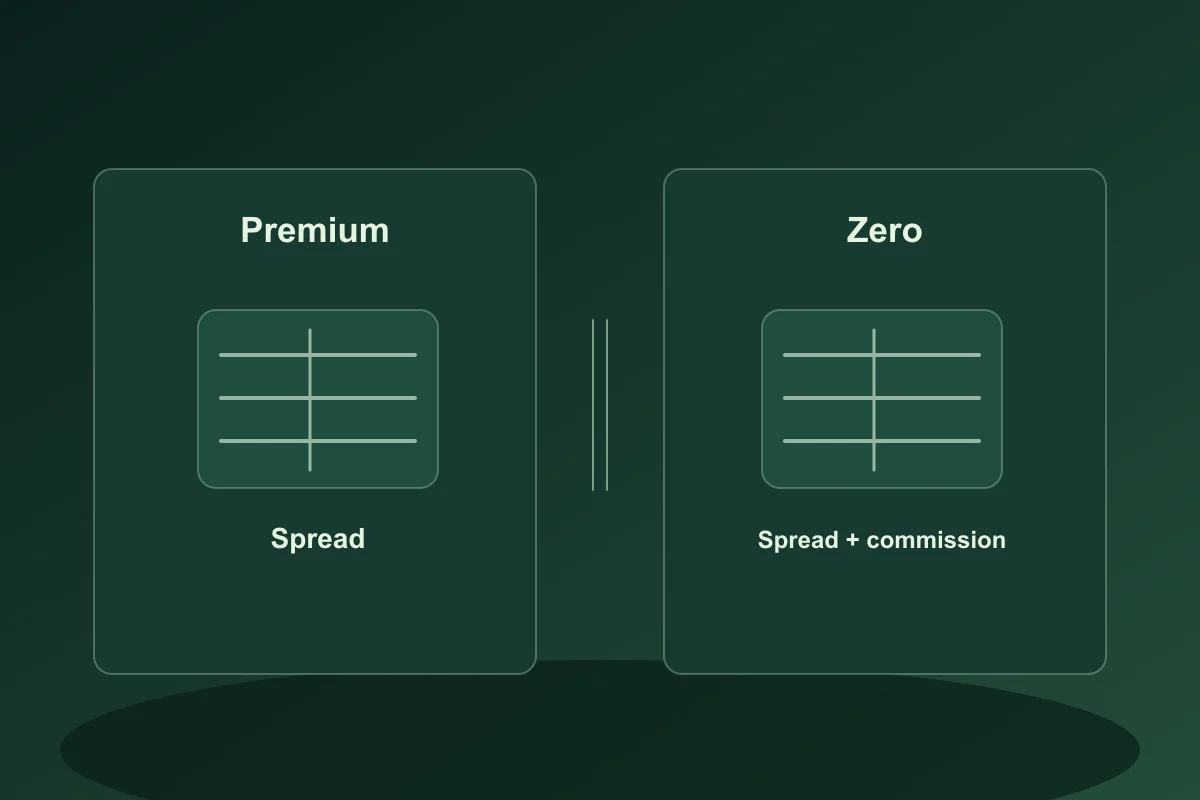
Premium and Zero price HFM trading differently. For the relevant forex products, Premium generally builds its trading charge into the spread, while Zero combines a spread with a separate commission. A useful choice compares the same pair, position size and trading hours, then adds holding costs, account-currency effects and the terms of the actual contracting entity.
Editorial comparison
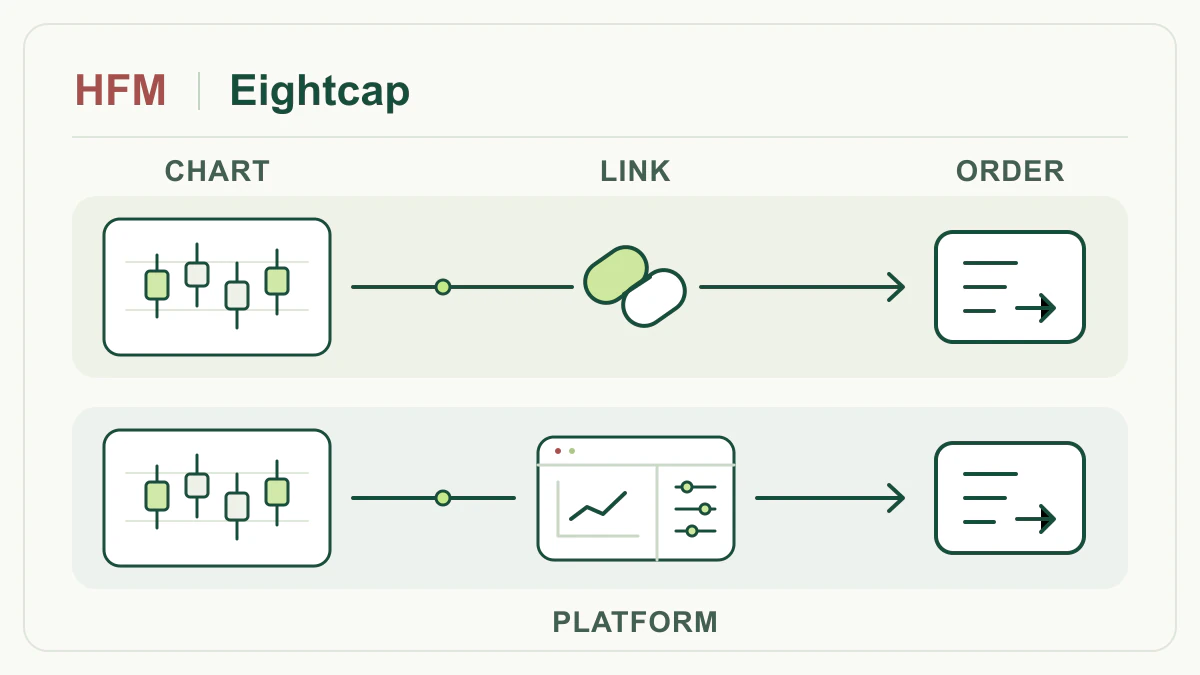
Manage orders in HFM WebTrader or connect an Eightcap account to TradingView? A practical comparison of account choices, commission for 0.10 lot and an example separating commission from spread.
Editorial comparison
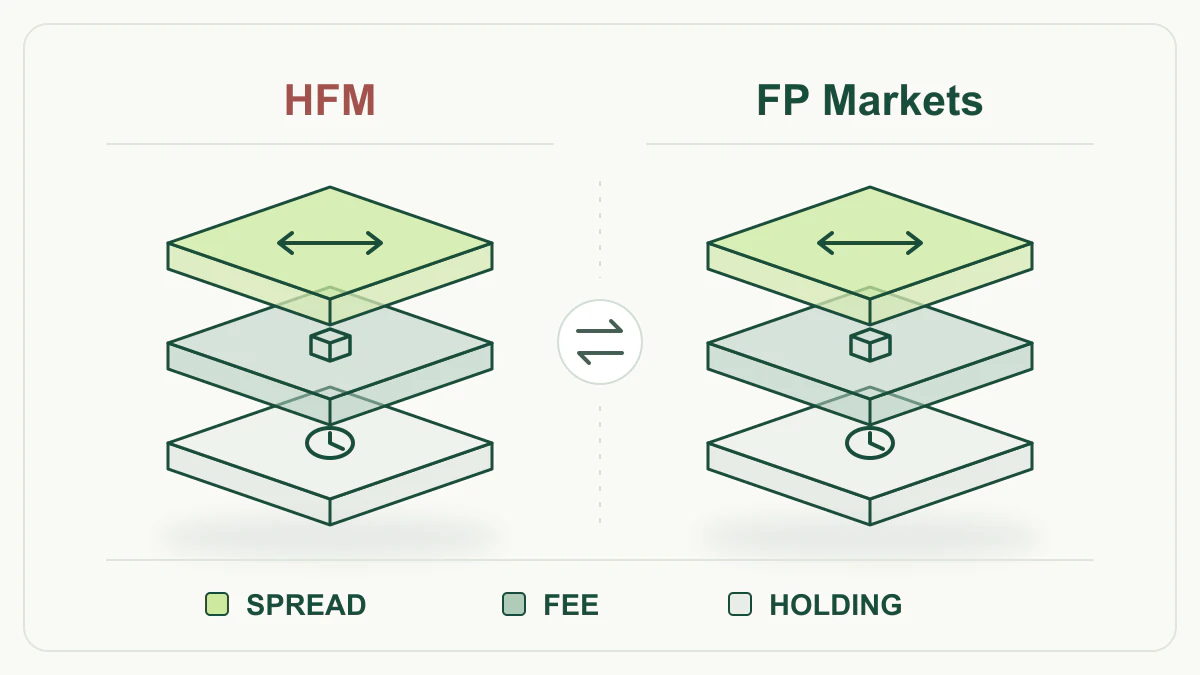
Compare HFM Zero, Premium and Pro with FP Markets Standard and Raw: commissions on the same basis, a complete cost example and platform choices that fit your workflow.

Editorial comparison
US shares versus a portfolio across markets: compare IBKR and Schwab International plans, execution channels, currencies and portfolio transfers.
Editorial comparison
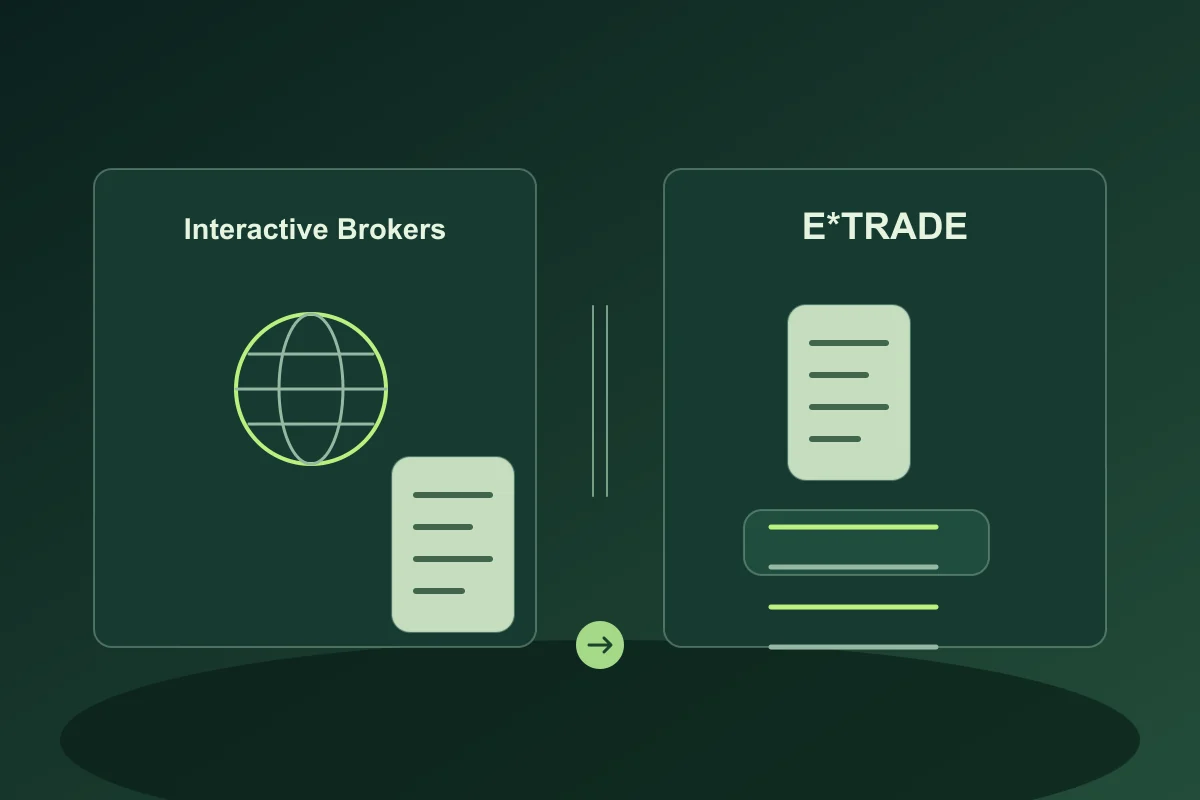
Compare IBKR with E*TRADE through residence eligibility, US stock and options pricing, Power E*TRADE, currency funding and custody. Israeli access is not assumed.

Editorial comparison
Compare an appropriate US account with a multi-currency portfolio workflow: opening restrictions, stock pricing, foreign trading, recurring purchases and fractional-share limitations.

Editorial comparison
Compare IBKR and Saxo by security, currency and account terms: trading fees, manual and automatic conversion, custody and stock lending.

Editorial comparison
Compare the intermediary and Hebrew-service arrangement with direct IBKR: asset custody, defined commission examples and separate HYBRID withholding enrollment.

Editorial comparison
KCEX and Bybit compared: spot and futures fees, Bybit options, VIP 0 rates and crypto transfer costs.

Editorial comparison
KCEX and MEXC compared: spot and futures fees, conditional MX discounts and withdrawals by coin, network and verification level.
Editorial comparison
Compare Koinly and CoinLedger on calculation completeness, skipped transactions, imports and report-year costs. Check the evidence before purchase and handover.
Editorial comparison
Compare Koinly and CoinTracking for several years of crypto records: report-year purchases, subscription capacity, transfer checks and preserving migration corrections.

Editorial comparison
An exchange file records activity at that provider; Koinly can combine sources and calculate from the data. Check coverage, transfers and duplicates before handing over reports.
Editorial comparison
Compare Kraken Pro with Binance.com for the same spot task: fee tier, fills, funding route and the amount reaching a wallet or bank. Includes reproducible cost examples and a practical workflow.
Editorial comparison
An execution fee can be easy to compare and still give the wrong answer about the total cost of buying crypto. Kraken vs Bitfinex makes that problem especially clear: Bitfinex's current zero spot execution charges sit beside funding rules that can make a particular bank route unsuitable for a smaller balance. Kraken's applicable Pro tier is only one component of its own route.

Editorial comparison
Map the route from funding to execution and withdrawal, separate spot from derivatives, and check Bitget account pricing against public product data.
Editorial comparison
Compare Kraken Pro and a direct Bitstamp account through funding, spot execution and a bank or wallet exit. Covers cost calculations, changing conditions and the records needed at every stage.

Editorial comparison
Define the product before comparing spot holdings with a derivative. Examine Kraken and Bybit trading fees, execution and funding using equal-notional examples.

Editorial comparison
Compare quoted purchases with order-book trading, then add funding, withdrawals and custody. Evaluate Kraken and Coinbase using the same transaction.
Editorial comparison
A purchase screen can make two crypto services look interchangeable: enter an amount, review a price and receive a balance. The difference becomes clearer when you ask how that price was formed, which company holds the asset and how the balance gets back to your bank. Kraken vs Crypto.com is therefore a comparison of specific routes through the products, rather than a contest between two logos.
Editorial comparison
Compare quoted purchases, Kraken Pro and Gemini ActiveTrader, including total wallet-exit costs and Gemini's UK, EEA and Australia account closures.

Editorial comparison
Separate zero trading commission from buying and withdrawal costs. Compare Kraken Pro and KCEX using execution price, funding, networks and exit workflow.

Editorial comparison
A zero maker fee does not settle the comparison. Check the pair, order channel and funding route, including savings versus additional transfer costs.

Editorial comparison
Ledger signs transactions and protects keys; Koinly consolidates data for reconciliation and reports. Combining them requires public addresses, complete history and checks before export.

Editorial comparison
Compare all five Ledger models by phone and desktop connectivity, transaction readability and backup options to choose a device that fits how you use crypto.

Editorial comparison
The choice depends on who signs and how access is recovered. Coinbase documents several wallet types and a Ledger connection to the Base extension; these differ from its exchange account.

Editorial comparison
A worksheet comparing Ledger self-custody with an exchange balance: key control, recovery after a failure, trading access and the cost of returning funds.
Editorial comparison
Choosing between Ledger and Trezor starts with the device and the tasks you need it to perform. This comparison selects Ledger Nano X and Trezor Safe 3, focusing on phone connectivity, physical approval, asset and network support, and recovery after device loss. Neither hardware wallet removes price volatility or rescues an incorrectly approved transfer.
Editorial comparison
Merrill Edge Self-Directed and a US retail Fidelity brokerage account offer similar base pricing for ordinary online stock trades, but the surrounding workflow differs. Linked-bank funding, dollar-based purchases, charges for other products and the cost of moving a portfolio can matter more than a headline stock commission.

Editorial comparison
Compare a defined transaction: standard spot schedules, BTCUSDT futures on web and app, API pricing, funding and wallet transfers. Worked costs and account checks for a practical comparison.

Editorial comparison
MEXC and Bybit compared: base-tier spot and futures fees, the MX discount, VIP tiers and identity checks before depositing.

Editorial comparison
Compare orders, automation and migration across MT4, MT5 and cTrader, with a netting-versus-hedging example and a clear separation of software features from broker terms.

Editorial comparison
Compare NinjaTrader Clearing pricing with the US Plus500 Futures offering only. Assess per-side commissions, plan fees, data and withdrawals without importing Plus500 CFD terms.

Editorial comparison
Compare service roles, capital, margins, programme limits and operating costs. A NinjaTrader Clearing account and Combine are different account arrangements.

Editorial comparison
Compare options by contract, approval and workflow: per-contract fees and minimums, scenario analysis, multi-leg orders, expiration and assignment.

Editorial comparison
Plus500EE spread pricing versus Eightcap Standard and Raw: platforms, round-trip costs, financing and net profit/loss conversion with worked scenarios.

Editorial comparison
Plus500EE spread-based CFDs versus FP’s global Standard and Raw accounts: platforms, supported guaranteed stops and holding costs.

Editorial comparison
Compare Plus500EE CFDs with direct share and ETF purchases through IBKR: ownership, equal-exposure costs, funding, currency conversion and account terms.

Editorial comparison
Compare retail CFDs from Plus500EE AS and OANDA TMS Brokers S.A., including product scope, spreads, commissions, financing, account charges and protections that depend on the entity and client status.

Editorial comparison
One-time challenges versus subscriptions, activation, resets and conditional refunds. Budget calculations for specified programmes without assuming a pass, discount or account acceptance.

Editorial comparison
When rewards can be requested, which profits count, how caps and splits affect money received, and what changes afterward. Every figure is tied to its programme and cohort.

Editorial comparison
Kraken offers recurring-order management in its app; Coinbase executes a purchase at setup and requires a new schedule to change amount or frequency. Compare every charge.

Editorial comparison
Compare RoboForex Pro, Prime and ECN with Exness Standard and Raw Spread using scoped fees and EUR/USD examples.

Editorial comparison
Compare Belize’s RoboForex Ltd with US OANDA Corporation: accounts, lots versus USD turnover, commission timing and the distinction between costs and risk.

Editorial comparison
How to compare a long-term portfolio at Saxo and Schwab International: security and venue, settlement currency, holding charges, stock lending and order channel.

Editorial comparison
A US portfolio in an appropriate account versus additional markets and currencies: opening conditions, foreign trading, conversion, custody and investing tools.

Editorial comparison
Calculate orders, conversion, custody and exit separately: monthly funding, conversion minimums, holding-day charges and currency risk.

Editorial comparison
Compare TradeDay Quick Pay and Fast Pass with FTMO CFD products: loss floors, recurring versus one-time costs and reward conditions.

Editorial comparison
Compare markets, loss floors, evaluation renewals, reward cycles and platforms at TradeDay and FundedNext Stellar CFD products.
Editorial comparison
Evaluation fees are only the beginning of a TradeDay versus Topstep comparison. Consistency measurement, the movement of the loss floor and the account after passing can matter just as much. This comparison selects Quick Pay EOD 50K and the regular 50K Trading Combine, separating the price of an attempt from a conditional right to request a reward.

Editorial comparison
Compare TradersPost signal routing with the 3Commas v2 route built with WunderTrading, including account scope, costs, permissions, migration checks and exits.

Editorial comparison
Compare external signal routing with plain-English strategy creation, check current Capitalise.ai onboarding routes, and plan testing, costs, monitoring and shutdown.

Editorial comparison
Compare TradersPost cloud routing with PineConnector execution through MetaTrader, including hosted Edge, account setup, position sizing, monitoring and an orderly exit.

Editorial comparison
TradersPost routes signals to a connected account; TraderSync consolidates records and analysis. Compare the signal chain, execution permissions, fill reconciliation and subscription needs at each stage.

Editorial comparison
TradingView defines conditions and alerts; TradersPost processes signals and routes instructions. Compare messages, symbols, signal prices, broker status and checks before live execution.
Editorial comparison
Compare journals by imports, decision records, exit analysis and missed trades. Understand historical Market Replay versus statistical simulation and choose around a repeatable review.

Editorial comparison
TraderSync analyses decisions and trades; Koinly consolidates crypto history and reports by tax year. Compare execution grouping, transfers, acquisition history, exports and professional preparation.
Editorial comparison
Compare imports, execution grouping, strategy rules, replay and mentor feedback. Choose a journal and plan around the review work you need to finish after trading.

Editorial comparison
TraderSync consolidates trade records and analysis; TradingView helps examine charts, conditions and strategies. Compare imports, partial fills, practice and the link between decisions and outcomes.
Editorial comparison
Compare TradeStation Securities, Global and direct IBKR by account structure, permissions, software, market data and the cost components of the same activity.
Editorial comparison
Choose a trading journal through a complete workflow: reconcile imports, review rules and behaviour, match the plan to the task and preserve records before leaving.
Editorial comparison
Choose a TradingView plan around a defined workload: charts displayed together, indicators on each chart and alerts that genuinely need to remain active. A larger subscription is not a better trading method. This comparison converts a routine into capacity requirements while separating software, market-data entitlements and the account executing trades.

Editorial comparison
Choose between TradingView and ATAS around chart analysis, footprints and automation, and check whether both screens use the same instrument and data.
Editorial comparison
Compare chart monitoring with financial statements, estimates and peer research, including data timing, exports, alerts and separate costs.
Editorial comparison
TradingView and TrendSpider support market research through different workflows. TradingView provides charts and Pine scripts, while TrendSpider emphasises visual condition building and testing. The choice depends on whether you need custom logic, a research experiment without coding, or a structured way to monitor a defined set of opportunities.

Editorial comparison
Compare Vantage and Eightcap forex pricing, TradingView account compatibility and contractual funding and withdrawal conditions. A EURUSD illustration separates commission from an assumed spread, without promising a trading price or saving.

Editorial comparison
Compare Vantage and FP Markets by contracting entity, Standard and Raw pricing, platform and holding costs. A EURUSD example separates spread from each side's commission, alongside account-specific funding and eligibility conditions.

Editorial comparison
Compare Vantage and FxPro account entities, Standard and Raw pricing, TradingView access and ancillary costs. A EURUSD example explains lot versus USD-notional commission while preserving material qualifications in the official terms.
Editorial comparison
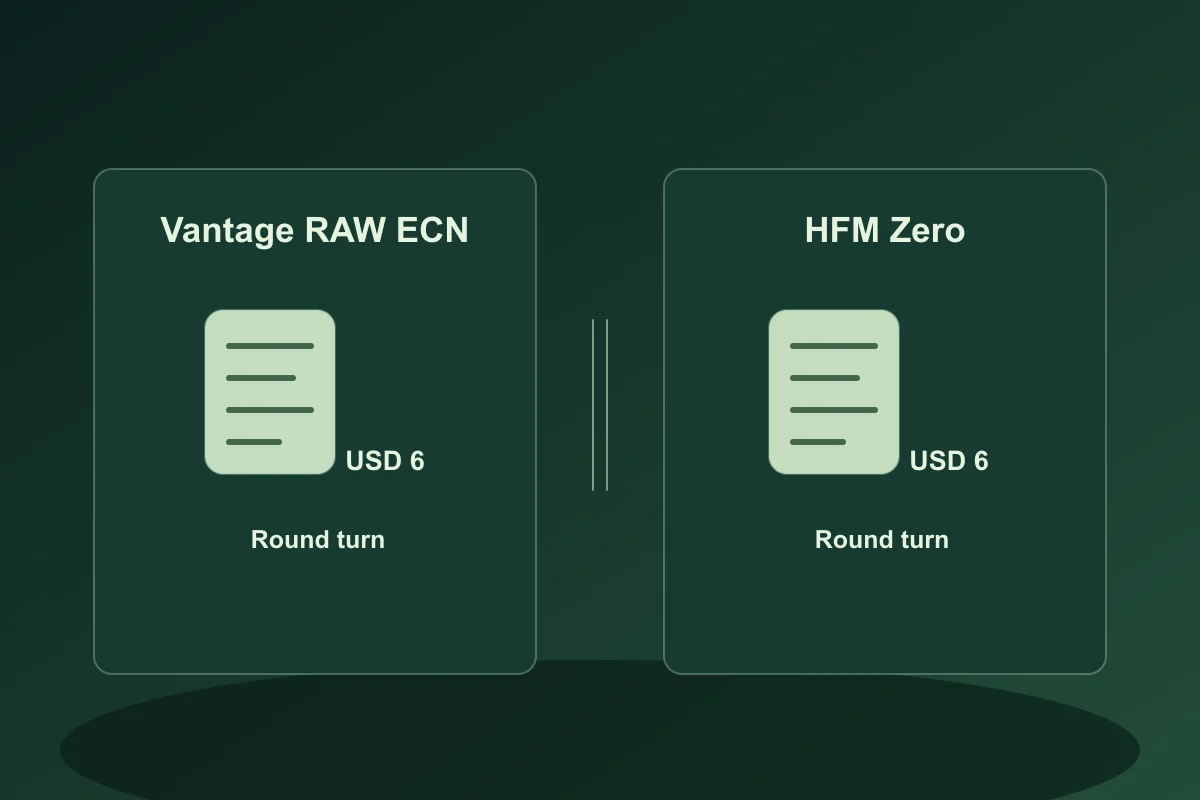
Vantage RAW ECN and HFM Zero both publish a $6 round-turn commission for the relevant USD forex configuration. That does not make the arrangements identical. Execution spreads, holding charges, contractual entities and account administration can still differ. The useful comparison starts where the headline commission stops answering the question.