Editorial comparison
Ledger vs Exchange Custody: Key Control and Recovering Access
A worksheet comparing Ledger self-custody with an exchange balance: key control, recovery after a failure, trading access and the cost of returning funds.

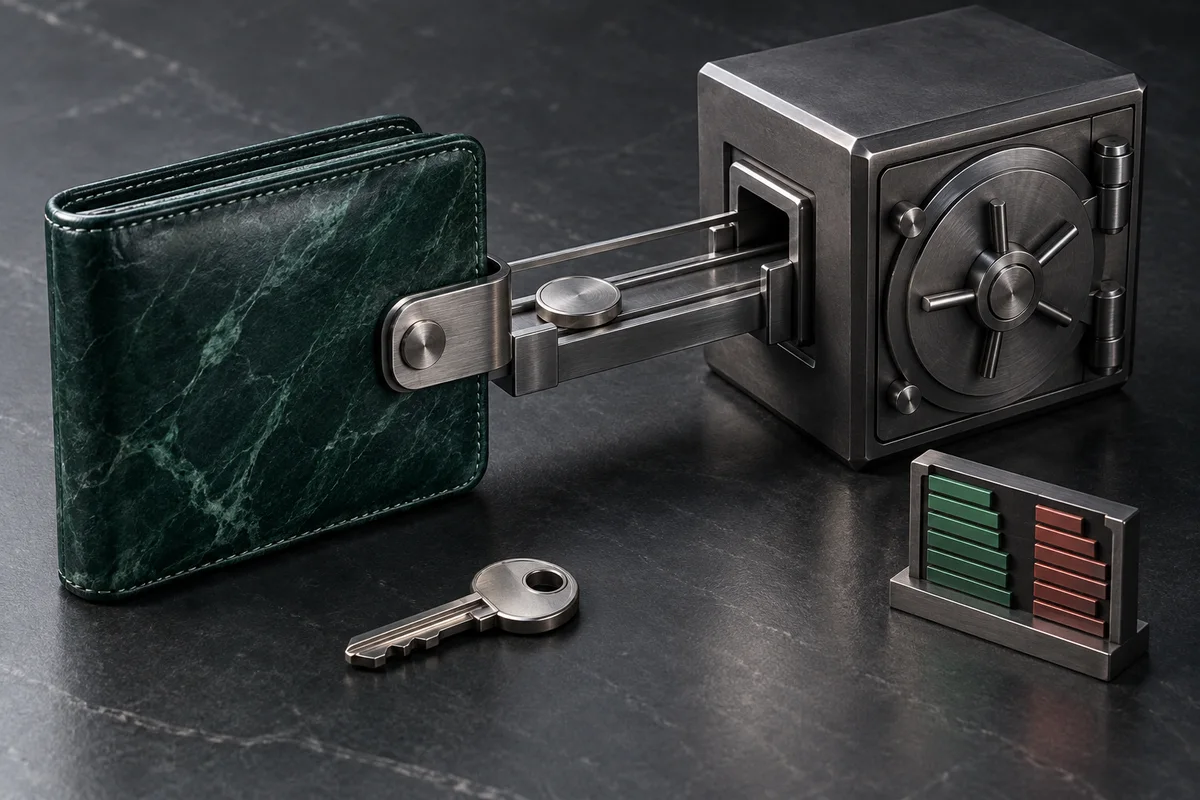
The choice is who can authorise a transaction
Ledger lets you authorise transfers using keys under your control; with exchange custody, the exchange manages the keys and withdrawal requests. The choice depends on your ability to protect backups and recover access, alongside your need to trade and use the funds. Buying a device alone does not complete a move to self-custody.
Crypto is not physically stored inside the device. Records exist on the network, while the wallet manages access and signing. The useful question is what happens if the device is lost, the backup is exposed or an exchange withdrawal is suspended. Each problem requires a different response. Before transferring, write down who is responsible at every stage and how you will establish that you control access.
What changes between the two custody models
The table describes responsibilities rather than assigning a security score to either product.
Scroll the table horizontally to read every column.
| Question | Ledger in self-custody | Exchange account |
|---|---|---|
| Who controls signing? | Whoever has access to the keys and backup | The exchange |
| What restores access? | The backup and appropriate wallet procedure | The provider's account process |
| What is needed to transfer? | A valid signature and network resources | Withdrawal approval, balance and provider conditions |
| Where is the main dependency? | Protecting secrets and approving transactions | Provider operations and account handling |
An exchange can also use cold storage. “Cold” and “self-custody” are therefore different concepts: one describes key storage, the other who controls the keys. A strong account password helps protect account access but does not transfer the exchange's private keys to you.
Check recovery before increasing the balance
Losing a device is different from losing the assets. A valid backup, together with everything required by your wallet configuration, can allow recovery on a compatible device. If both key access and all recovery routes are lost, resetting an online-service password does not restore them. Establish the appropriate recovery procedure before depending on it.
Keep the recovery secret out of photos, messages and shared folders. Do not give it to someone claiming to provide support. A legitimate check does not involve entering the words into a website offering to “verify” a wallet. The Ledger setup and recovery guide covers device procedures; the question here is whether you could carry them out after a failure without exposing the backup.
Check access dependencies at the exchange
For a Bybit or Bitget account, seeing a balance and requesting its withdrawal are different actions. Their withdrawal guides require security checks and an asset/network choice, with possible additional account conditions. Do not base an urgent payment on the assumption that every displayed balance is immediately withdrawable.
Check verification requirements, available funds and the official support route. For a custody decision, also read what the provider's terms say about customer assets, their use and failure scenarios. A security badge, reserve attestation or use of cold storage does not answer all of those questions by itself. The exchange's name alone does not establish a particular protection for your funds.
Decision example: near-term trading and a separate holding
Assume an educational balance of 10,000 USDT: 2,000 for an action the reader has already independently decided to take, and 8,000 not currently needed for it. The split illustrates the worksheet; it is not a recommended investment amount or custody allocation.
Moving 8,000 to a wallet leaves 2,000 at the exchange before costs. If a hypothetical 3 USDT withdrawal charge is deducted from the amount sent, the wallet receives 7,997 USDT. Returning those funds later requires a supported network, resources for the transfer and valid deposit conditions. Someone unable to recover wallet access does not solve that problem merely by moving funds. Conversely, a future trading need does not require every balance to remain with the same provider.
Plan the return route as well
After a successful wallet transfer, check whether the asset can also be spent on the selected network. An ordinary Ethereum wallet needs ETH to pay for an outgoing transfer; TRON uses a different resource model. A USDT balance alone does not answer the network-cost question or establish that funds are ready to move at any moment.
Before returning to an exchange, reopen its deposit instructions: asset, network, address, minimum and any required extra identifier. Do not rely solely on a previously saved address. The USDT transfer checklist separates an on-chain receipt from exchange-account credit. A device supporting transaction signing does not establish that the receiving exchange supports the same route.
What a hardware wallet does not solve
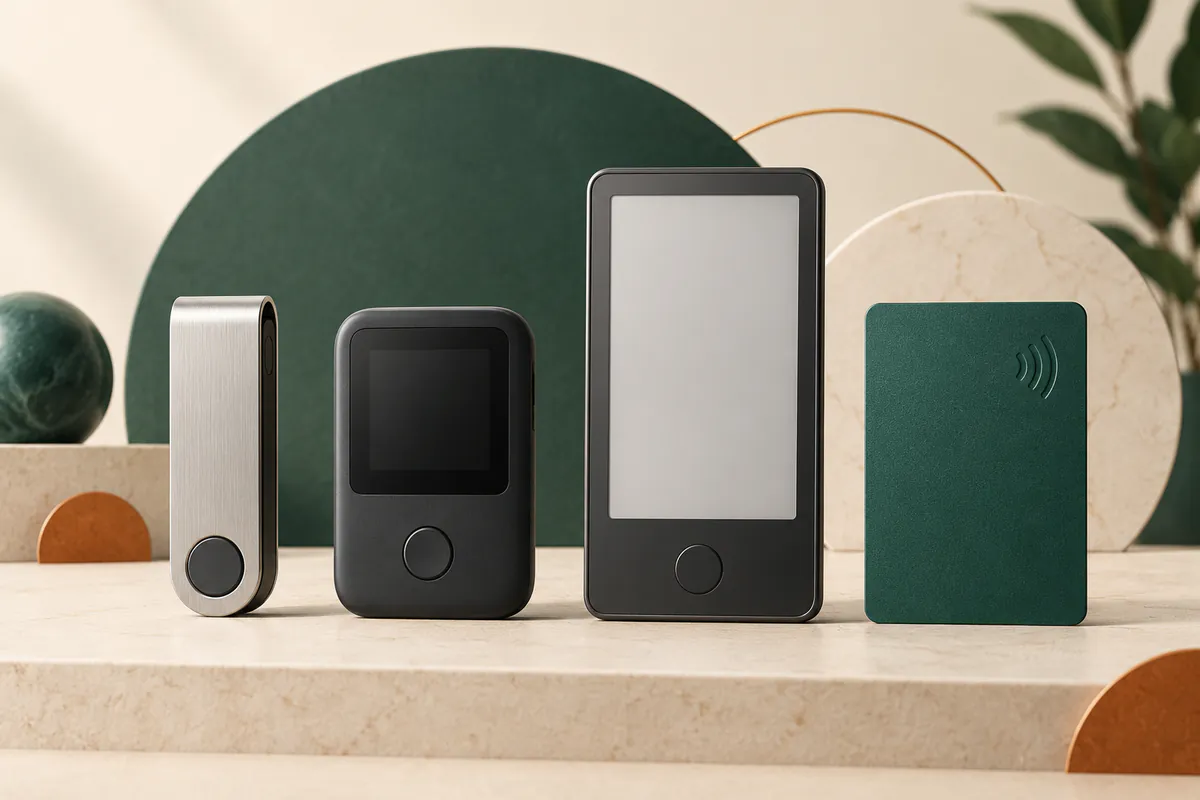
The device cannot protect against every action you approve. A wrong address, disclosure of the recovery secret or approval of an instruction you do not understand can bypass the protection of signing on hardware. Read transaction details, including the destination, on the device display before confirming. Connecting a familiar app does not establish that every request inside it is safe.
A swap service displayed within a wallet app may also be operated by a third party under its own terms and charges. Self-custody changes control over keys; it does not remove price volatility or risks inherent in the asset. Compare the failures you can recognise and responsibilities you can manage, rather than treating either option as risk-free.
A decision worksheet to complete before transferring
Write down which balance is needed for near-term activity, who protects the backup, what happens if the device fails and how funds return to a usable payment or trading route. Budget separately for the device and transfers. No single monetary threshold establishes that self-custody suits everyone.
If your main question concerns screen size or a phone connection, see the Ledger model comparison. If it concerns responsibility when access fails, complete the custody worksheet first. The decision rests on intended use and operational ability, rather than a blanket instruction to keep everything in one place.